518 STUCCOREPAIR · REFINISH · NEW STUCCO (home) Call or text (518) 888-7851 Free estimate

Stucco repair · Troy to Saratoga Springs

Stucco and exterior plaster repair in the 518

Solid-sounding stucco with hairline cracks needs a very different repair than hollow, delaminated coats over damp brick or lath. We test the bond, stop the water source, match the mortar chemistry and blend the texture.

Call or text (518) 888-7851

Book spring work now. Winter assessments and estimates available.

Updated November 2026

Close-up of a light plastered wall surface
Photo: Stock photo

Short answer

Most cracked, hollow or stained stucco across the 518 can be repaired in sections without stripping the whole house. We sound out loose coats, fix the flashing or joint letting water behind the wall, match soft lime mortar on older brick or Portland cement on modern lath, and blend the texture. Finish coats need 40 °F and rising.

Key facts

Service area
Troy, Cohoes, Watervliet, Schenectady, Saratoga Springs, Clifton Park, Amsterdam and the rest of the 518.
Season
EIFS and stucco finishes need about 40 °F and rising, with no freezing for 24 hours. In the Capital Region that means spring through late fall.
Who does the work
Our own crews, from The Dom Construction Group LLC.
Insurance
General liability, umbrella and workers' compensation insurance; certificates on request.
Estimates
Free. Start with 3–5 photos by text, or use the form.
Reply
We reply within one business day, Monday to Friday.

Four kinds of stucco failure and what drives them

Identifying the pattern tells us whether the wall needs crack bridging, a section cutout or flashing metal first.

Stair-step or diagonal corner cracks

Sharp cracks angle outward from the lower corners of windows, door headers or beam pockets.

Usually means
Seasonal framing movement or masonry settlement concentrated stress at openings built without casing beads or control joints.
What we do
Check bond around the crack, fix perimeter sealant, and either mesh-bridge tight coats or cut in proper casing and patch mortar.

Bulging or blistered sections

A belly in the plaster bows slightly outward and flexes or crunches when pressed.

Usually means
Chronic roof or window leakage rusted out buried steel lath or separated coats during repeated winter freezes.
What we do
Cut back to dry framing or firm brick, replace damaged sheathing and lath over fresh weather barrier, and build new scratch and brown coats.

Crumbled band along pavement or soil

The bottom four to eight inches of stucco turn sandy, rust-stained and ragged along patios, steps or beds.

Usually means
Stucco was run straight into concrete or soil without a weep screed, wicking ground water and de-icing salt upward.
What we do
Cut the bottom termination cleanly above grade or paving, install a corrosion-resistant weep screed and rebuild the lower band.

Peeling paint with powdery mortar underneath

Thick paint sheets curl back to reveal damp, chalky white efflorescence and soft plaster.

Usually means
Non-breathable exterior house paint trapped outgoing building moisture inside lime or cement stucco.
What we do
Strip loose film, repair soft plaster with compatible mortar and switch to a vapor-permeable masonry or mineral finish.

How we diagnose cracked or hollow stucco

Hairline crazing and loose delamination look similar from the curb, so our first move on a site visit is sounding the elevation. Tapping across the plaster tells us right away where the base coat remains keyed into brick or lath and where frost has broken the bond. Tight shrinkage cracks on solid stucco can often be bridged with fiberglass mesh in polymer-modified base coat without tearing open the wall.

When tapping produces a dull, hollow thud, the coat has separated from its backing. Smearing caulk over hollow plaster only traps rain inside the pocket until chunks break loose. We score cleanly around the sound perimeter with a diamond blade, strip out the loose stucco, and check the substrate before rebuilding:

  • Diagonal cracks at window and door corners driven by framing movement, missing casing beads or failed perimeter sealant.
  • Bulging bellies and blisters where trapped water froze between coats or rusted through old metal lath.
  • Crumbled bottom edges where stucco ran straight into soil, mulch or pavement without a weep screed.
  • Dark staining below roof intersections where kick-out or head flashing was omitted.

Matching mix hardness to brick, block or wood lath

Capital Region neighborhoods hold over a century of exterior plaster, and each backing needs a compatible mortar. On nineteenth-century rowhouses and masonry homes in Troy, Cohoes and Watervliet, exterior stucco sits directly on soft clay brick laid in lime mortar. Patching those walls with stiff Portland cement traps outgoing moisture behind the dense repair, causing winter frost to shear the patch and the brick face right off. On historic brick we use softer, vapor-permeable lime-based mixes that breathe and flex with the masonry.

On 1920s and 1930s houses in Schenectady, Amsterdam and Saratoga Springs built with wood lath or early wire mesh over board sheathing, opening a loose area lets us inspect the paper and framing underneath. Rotted wood lath gives way to two layers of fresh water-resistive barrier and galvanized self-furring metal lath fastened into studs, built back in scratch and brown coats.

Fixing the flashing or joint that started the damage

Cement stucco sheds rain well, yet it relies on metal flashings and flexible sealant joints at openings to keep bulk water out of the wall cavity. Whenever we open a stained patch, we trace upward to the leak: a window sill missing end dams, an un-flashed deck ledger or trim band, or roof runoff spilling down the wall. Our crew installs the needed drip cap, kick-out diverter or waterproofing sealant joint during the repair so the new mortar stays dry. If you are buying a home or weighing repairs across several elevations, see our paid EIFS and exterior inspections.

Blending texture and what repairs typically cost

Fresh stucco cures lighter and sharper than weathered plaster. We match float, dash, sponge and skip-trowel finishes by making sample textures beside the existing coat and feathering into trim lines or corners where practical. When decades of faded paint make a spot patch stand out, we price full-elevation stucco refinishing alongside the localized repair so you can compare both options clearly.

Small crack and hollow-spot repairs usually run from a few hundred to a couple of thousand dollars, while larger moisture rebuilds follow how much lath, sheathing or scaffold access is involved. Finish coats require about 40 °F and rising with no freezing for 24 hours, and we provide estimates year-round.

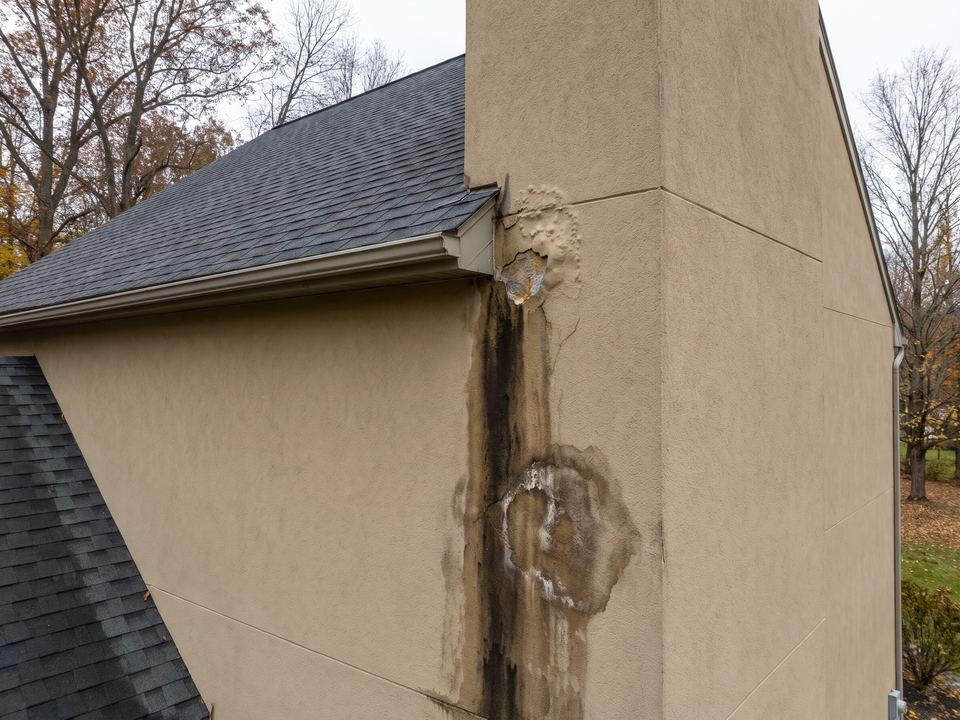
Roof-to-wall runoff behind stained stucco

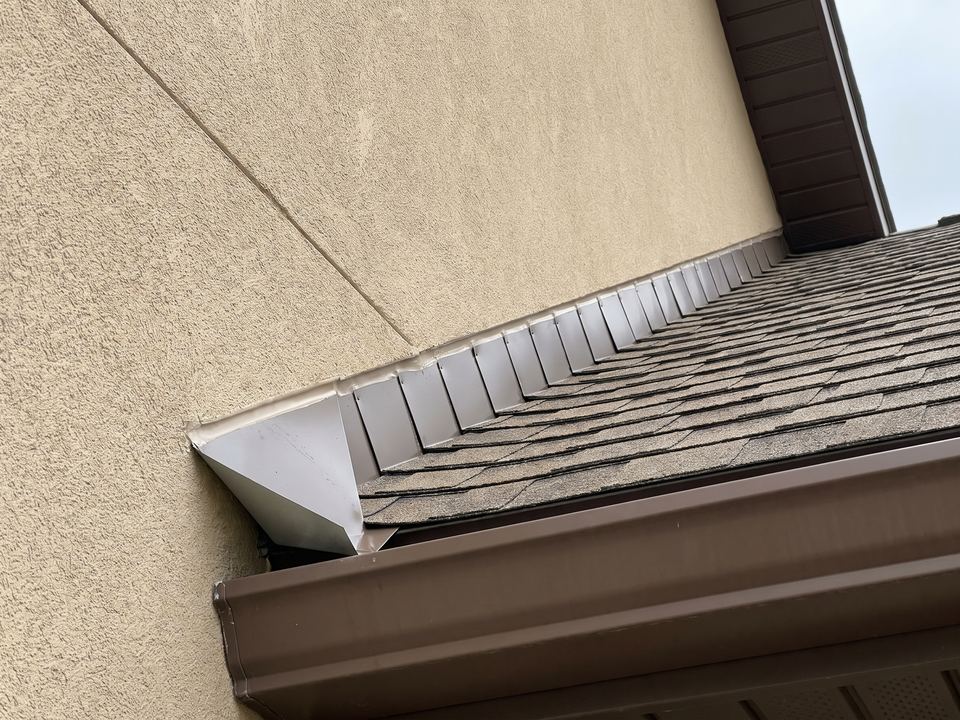
AI-generated illustration: water stain and damaged finish on an EIFS wall below a roof edge with no kick-out flashing

AI-generated illustration

AI-generated illustration: the problem.
AI-generated illustration: a metal kick-out flashing at a roof-wall corner turning water into the gutter

AI-generated illustration

AI-generated illustration: the fix.

Stucco and plaster repair questions

Should hairline cracks in solid cement stucco simply be caulked?

Running beads of tube caulk along surface cracks leaves raised shiny ridges that collect dirt and telegraph right through fresh coatings, because smooth gun-grade sealant has no sand grain while surrounding stucco is textured. When the stucco is still tightly bonded to its lath or masonry, fine cracks are bridged with elastomeric stucco patch compound or embedded fiberglass mesh in polymer-modified base coat so the surface grain matches.

Will a localized stucco patch blend seamlessly into an older wall?

Sand size and trowel pattern, such as float, dash, sponge or skip-trowel, can be matched closely against the original plaster. Color is the harder half on unpainted walls that have weathered twenty or thirty years of sun and road dust, because fresh mortar cures cleaner and brighter. Breaking a finish coat at inside corners, trim bands or downspouts, or recoating that single elevation, eliminates a visible halo.

What happens when we open loose stucco over wood lath on an older house?

Early twentieth-century homes in Schenectady and Saratoga Springs frequently hold stucco keyed directly between narrow wood lath strips. Where water has leaked only briefly, the wood lath and board sheathing are often dry enough to re-fasten or overlay with building paper and galvanized metal lath. Where chronic roof or window leaks softened the wood sheathing, rotted boards are cut out and replaced flush before new lath goes up.

Why does stucco crumble along the bottom edge near driveways and flowerbeds?

When cement stucco extends straight down into soil, mulch or concrete flatwork without a gap, capillary action pulls ground water upward into the bottom six inches of the coat. Road salt and repeated freeze-thaw cycles then corrode the metal lath and break apart the mortar. Cutting the bottom back cleanly above paved surfaces or soil and installing a rust-resistant weep screed or drip edge stops the wicking.

How many days does a typical residential stucco patch take?

Multi-coat cement and lime repairs cannot be rushed into one afternoon because each layer needs curing time before the next goes over it. Removing loose stucco, correcting flashing, fastening lath and placing the scratch and brown coats typically happen over one to two visits, followed by curing time before the textured finish coat is floated on. Most residential patch scopes wrap up across two to four site days.

Photos of your cracked stucco for a free estimate

Attach one close-up of the damaged spot and one wide shot showing the full wall height.

Rather text? Text photos to (518) 888-7851

What are you seeing? (optional)
Add details (optional)
Property (optional)
How soon? (optional)
Best way to reply (optional)
Photos (optional, up to 5)

Add 3–5 photos: one close-up and one of the whole wall. We shrink them before sending.

    required. We reply within one business day, Monday to Friday. We use your details only to reply to this request. Privacy

    Rather text?

    (518) 888-7851

    Call or text Monday–Friday, 7 AM–5 PM.

    Other exterior work that pairs with stucco repair

    Hearing a hollow ring when you tap the wall?

    Book spring work now. Winter assessments and estimates available.